America is actively removing, renaming, and reinterpreting parts of its historical landscape — from monuments and military bases to textbooks and museum displays. These changes reflect a national debate over identity, memory, and accountability. Supporters call it progress; critics call it erasure. This article explains what is happening, why now, and what it means for everyday Americans.
A Nation Rewriting Its Public Memory in Real Time
For most of American history, public monuments and school textbooks seemed permanent. They were treated as fixed markers of truth — unquestionable symbols carved into bronze, marble, and curriculum. But in the last decade, something extraordinary has happened: America has begun reexamining how it presents its own past.
Statues have been removed. Military installations have been renamed. Historical exhibits have been rewritten. Entire educational narratives have been expanded or challenged. These changes are not small or isolated. They represent one of the largest public renegotiations of historical memory in modern U.S. history.
For some Americans, this feels like overdue accountability. For others, it feels like cultural whiplash. And for many, it raises a powerful emotional question:
Can a country change how it honors its past without losing itself?
This article explores what has been removed, why it is happening now, and how it affects communities across the country. More importantly, it examines what this moment reveals about America’s evolving identity.
Why Is America Removing Historical Symbols?
The core issue is not about deleting historical events. It is about who and what public spaces choose to celebrate.
Monuments, building names, and textbooks are not neutral objects. They send messages about values. When a statue stands in a town square or a school bears a certain name, it signals approval, honor, and recognition. As American society changes, many citizens are asking whether older honors still align with modern democratic ideals.
Research from the Southern Poverty Law Center documented that more than 160 Confederate-related symbols were removed or renamed between 2015 and 2023. These removals accelerated after nationwide protests in 2020, but the conversation had been building for decades.
Supporters argue these removals correct historical imbalances. Critics argue they risk oversimplifying the past. Both sides agree on one thing: the debate is not just historical — it is deeply personal.
What Exactly Has Been Removed?
Confederate Monuments and Memorials
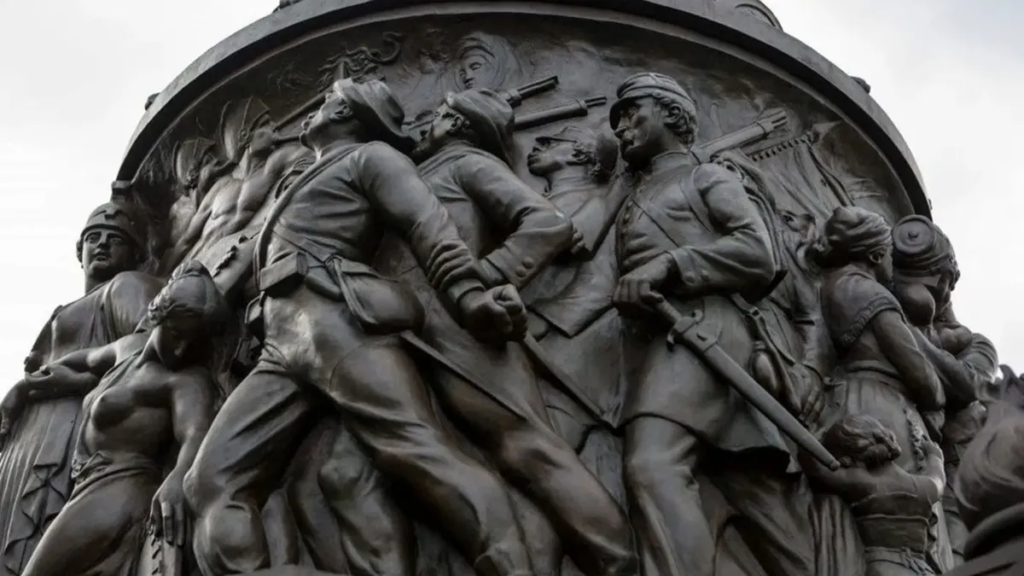
Confederate statues became the most visible flashpoint in the national conversation. Many of these monuments were erected long after the Civil War ended, often during the Jim Crow era, when segregation laws dominated the South. Historians note that these statues were frequently political statements reinforcing racial hierarchy, not neutral tributes to history.
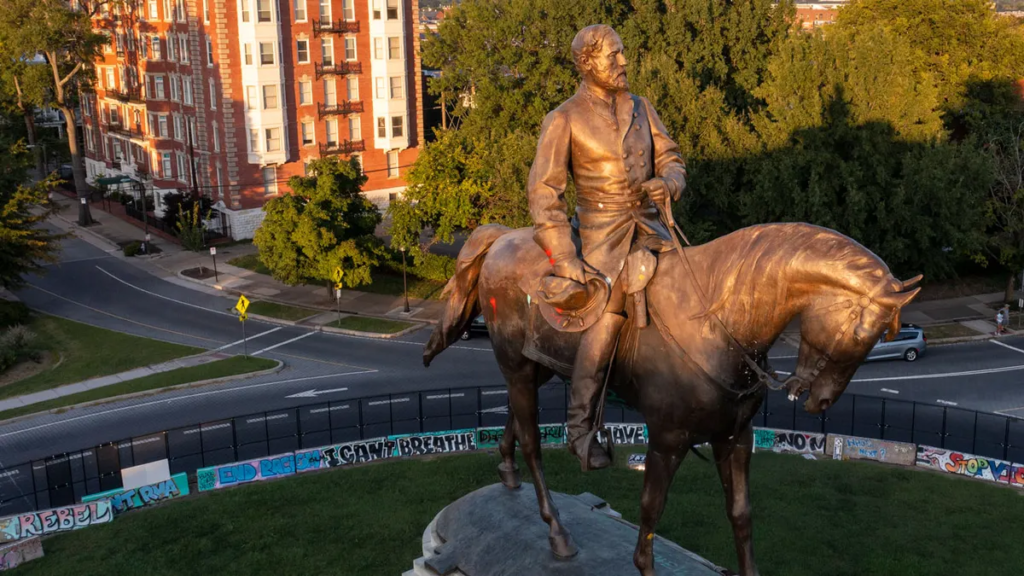
When Richmond, Virginia — once the capital of the Confederacy — removed its iconic statues along Monument Avenue, the moment felt symbolic nationwide. Some residents celebrated what they saw as moral progress. Others mourned what they viewed as an attack on heritage.
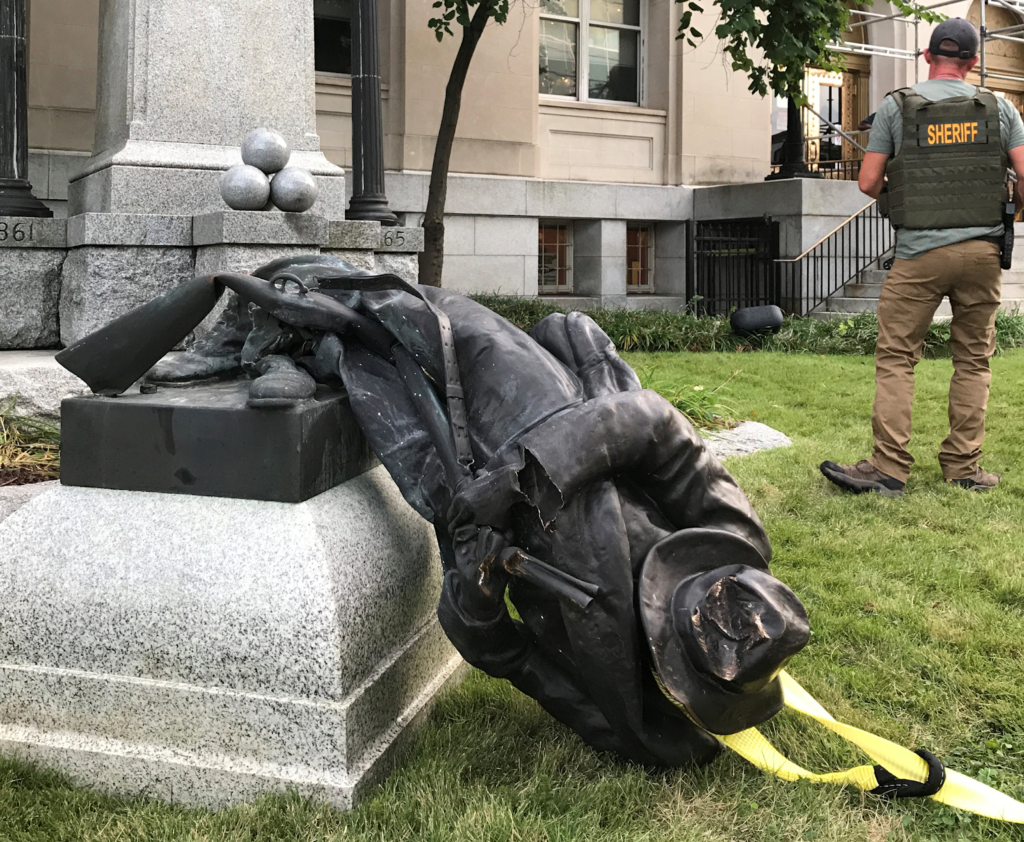
The removals triggered lawsuits, protests, and passionate town hall debates. Yet they also sparked new conversations about whose stories had historically been excluded from public recognition.
Renaming Military Bases
Several U.S. military bases were named after Confederate generals. A bipartisan congressional commission recommended renaming them to reflect modern military values. The result was a sweeping update:
- Fort Bragg became Fort Liberty
- Fort Hood became Fort Cavazos
- Fort Lee became Fort Gregg-Adams
For veterans, these changes stirred complex emotions. Some welcomed the updates as a reflection of a diverse, unified armed force. Others felt the renaming erased personal memories connected to their service.
What made this moment significant was its bipartisan support. It demonstrated that the debate over historical symbols is not confined to one political ideology.
Textbook Revisions in Schools
Educational institutions have also become a central battleground. Many states are revising textbooks to include perspectives historically underrepresented in mainstream narratives. Topics such as slavery, Indigenous displacement, civil rights struggles, and immigration history are receiving expanded attention.
Parents and educators remain divided. Some see these revisions as long-overdue honesty. Others fear ideological influence or national self-criticism that goes too far.
Yet most historians agree on one point: history education has always evolved. Textbooks from the 1950s look dramatically different from those today. The current debate simply reflects another stage in that evolution.
Museum Reinterpretations
Museums are not removing artifacts; they are recontextualizing them. Exhibits now include broader perspectives, additional voices, and more complex storytelling. Instead of glorifying figures uncritically, institutions are presenting historical actors within their moral and social context.
This approach mirrors international trends. Countries around the world are reassessing colonial and wartime displays to promote fuller narratives. The goal is not erasure — it is understanding.
Is History Being Erased?
This is the most common question Americans are asking online.
The short answer: no. Historical records remain intact. Documents, archives, and scholarship continue to preserve events. What is changing is public symbolism.
Supporters of removal argue that public honors should reflect shared civic values. Opponents worry that reinterpretation risks losing nuance or imposing modern morality too rigidly on past eras.
The tension exists because history serves two roles:
- It records facts
- It shapes identity
When identity feels threatened, debates intensify.
Why Is This Happening Now?
Several forces converged to accelerate change:
- Digital activism amplified marginalized voices
- Social media increased public accountability
- Academic research reached mainstream audiences
- Younger generations demand institutional transparency
- Demographic shifts reshaped cultural priorities
- Protests highlighted unresolved historical grievances
Surveys from Pew Research consistently show generational divides in attitudes toward monuments and curriculum. Younger Americans are more likely to support reinterpretation, suggesting this conversation will continue for decades.
History is not frozen; it moves with society.
Real-Life Community Impact
These debates are not abstract intellectual exercises. They reshape real communities.
In New Orleans, monument removals sparked intense legal and political battles. Business owners worried about tourism. Activists argued the city’s moral credibility was at stake. After removals, tourism remained stable, and new cultural initiatives emphasized inclusive storytelling.
In smaller towns, the effects vary. Some communities replace statues with memorials honoring local civil rights leaders. Others move monuments into museums where historical context can be preserved without public glorification.
Every removal forces communities to confront a deeper question: What values should our public spaces represent?
The Emotional Weight of Historical Change
History is tied to identity, family memory, and regional pride. When symbols disappear, people often experience grief, anger, or relief — sometimes all at once.
Sociologists note that national memory debates tend to emerge during periods of rapid social transformation. They are signs of a society renegotiating its moral framework. Similar processes occurred in post-apartheid South Africa and post-war Europe.
America is undergoing its own moment of reflection.
What Americans Are Searching For Right Now
Trending search queries reveal public concerns:
- Are we rewriting American history?
- Who controls historical narratives?
- Will more monuments be removed?
- Is this political or educational?
- How should children learn controversial history?
- Can history ever be neutral?
These questions reflect anxiety about stability. Americans want to understand whether change strengthens or weakens national unity.
Practical Ways to Engage Constructively
Instead of viewing the issue purely through politics, many historians recommend civic engagement grounded in curiosity.
Constructive steps include:
- Visiting museums and reading primary sources
- Attending local forums about public memorials
- Supporting community dialogue programs
- Encouraging historical literacy in schools
- Listening across generational perspectives
- Separating facts from symbolism
- Promoting nuanced discussion over polarization
Understanding history requires conversation, not silence.
What Happens Next?
Experts predict ongoing transformation. Future debates may include:
- Indigenous land acknowledgments
- New national monuments celebrating diversity
- Expanded digital archives
- Civic education reforms
- Reassessment of additional historical figures
- Greater community involvement in public memory decisions
Rather than a single turning point, this is an ongoing negotiation between past and present.
The Bigger Picture: A Nation in Dialogue With Itself
America is not destroying history. It is renegotiating how history is honored. That process is messy because democracy is messy. But it is also evidence of a living, evolving society willing to question itself.
Public memory has always shifted. The difference now is speed. Social media compresses debates that once unfolded over decades into a few years. The result feels dramatic — but it is part of a long historical pattern.
The United States is confronting its myths, its triumphs, and its contradictions simultaneously.
That confrontation is uncomfortable. It is also necessary.
Final Reflection
The real question is not whether monuments stand or fall. The real question is whether Americans can talk about history without tearing apart the social fabric that binds them.
What’s being removed is not just stone and metal. It is the illusion that history is simple. The past is complex. Always has been.
The future depends on how honestly a nation chooses to face that complexity.
Frequently Asked Questions (FAQ)
1. Is America deleting its history?
No. Historical records remain preserved. The debate concerns public honors and representation, not the existence of events.
2. Why remove statues instead of adding plaques?
Some communities choose contextual plaques. Others believe relocation to museums provides fuller education without public glorification.
3. Who decides what gets removed?
Decisions are made by local governments, federal commissions, courts, and community votes.
4. Are textbooks becoming politically biased?
Curriculum debates are ongoing. Academic peer review and transparency aim to maintain educational standards.
5. Does removal dishonor ancestors?
Opinions vary. Some families feel loss; others believe it corrects historical imbalance.
6. Are other countries doing this too?
Yes. Many nations are reassessing colonial and wartime monuments to reflect modern values.
7. Will more monuments be removed?
Likely, as public conversations continue and demographics shift.
8. Is this about politics or morality?
For many Americans, it is both — civic identity intersects with political belief.
9. Can history ever be neutral?
Most historians argue neutrality is impossible; interpretation is always present.
10. How should children learn controversial history?
Experts recommend age-appropriate honesty combined with critical thinking education.