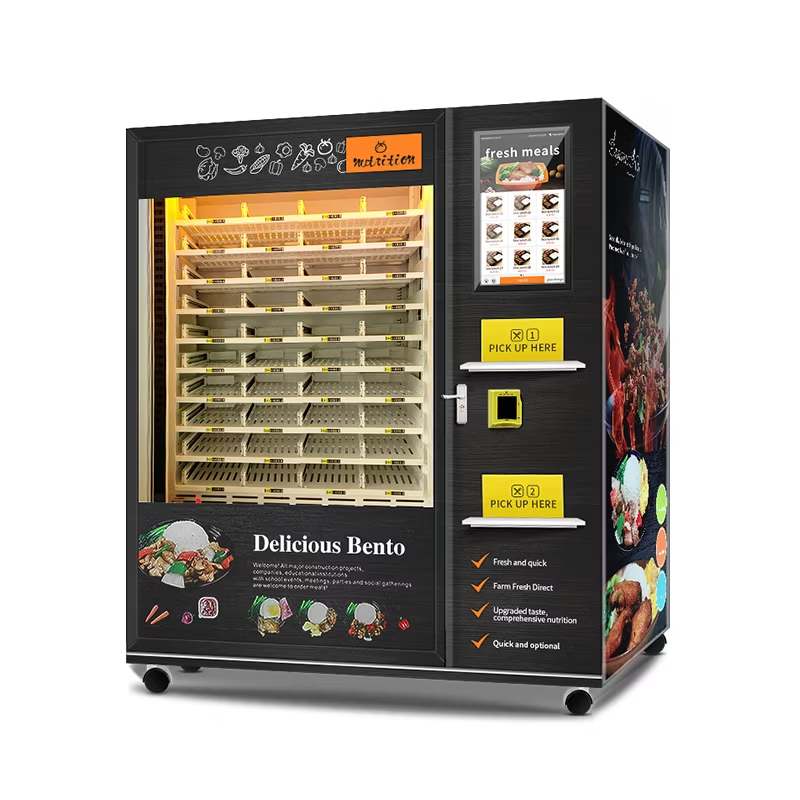
Gourmet vending machines are transforming how Americans eat. Far beyond chips and soda, these smart machines now serve fresh sushi, hot pizza, chef-designed meals, and healthy bowls—often 24/7. Driven by labor shortages, rising costs, and demand for convenience, automated dining is quietly outperforming traditional food models in key settings. What’s emerging may permanently reshape the future of dining.
The Food Industry Is Changing—And It’s Not Happening in Restaurants
For decades, vending machines represented the lowest tier of food culture. You used them when you had no better option—late at night, between meetings, or when everything else was closed. The food was forgettable. The experience was joyless.
That image is no longer accurate.
Across office buildings, airports, hospitals, universities, apartment complexes, and gyms in the United States, a new category of food service is expanding rapidly: gourmet vending machines.
These machines don’t sell snacks. They sell full meals—fresh, thoughtfully designed, and surprisingly satisfying. And they’re forcing the restaurant industry to confront an uncomfortable reality.
What if convenience no longer means low quality?
What if automation isn’t killing food culture—but redefining it?
What Exactly Is a Gourmet Vending Machine?
A gourmet vending machine is best described as a self-contained, automated restaurant without a dining room.
Unlike traditional vending machines, these systems are built around freshness, safety, and transparency. They combine refrigeration, heating technology, software, and logistics into a single unit.
Most gourmet vending machines feature:
- Meals prepared daily in centralized kitchens
- Smart refrigeration and temperature monitoring
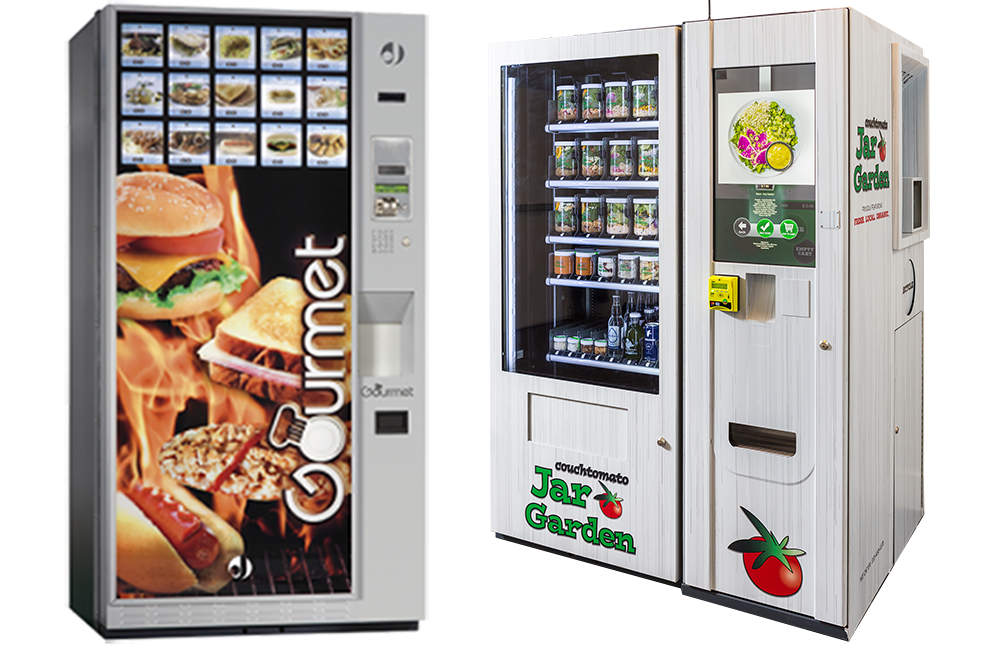
- Touchscreen ordering systems
- Cashless and contactless payment options
- Ingredient lists, calorie counts, and nutrition data
- Real-time inventory tracking
Some machines dispense cold meals like salads, wraps, sushi, and protein bowls. Others heat food on demand, serving hot pizza, burgers, pasta, or comfort meals in minutes.
In many cases, the quality rivals fast-casual restaurants—and sometimes exceeds them.
Why Are Gourmet Vending Machines Suddenly Everywhere?
This trend didn’t appear overnight. It’s the result of several powerful forces reshaping the food industry at the same time.
Labor Shortages Are Restructuring Food Service
The U.S. food service industry has faced persistent staffing shortages since the pandemic. According to the U.S. Bureau of Labor Statistics, restaurants continue to experience high turnover and rising labor costs.
Gourmet vending machines eliminate many of those pressures:
- No front-of-house staff
- Minimal maintenance labor
- No scheduling conflicts
- No sick days or call-outs
For operators, that reliability is revolutionary.
Americans Want Food on Their Own Schedule
Traditional meal times no longer define how people eat. Americans now snack, graze, and eat between commitments. Late nights, early mornings, and irregular schedules are normal.
Gourmet vending machines fit that reality perfectly by offering:
- 24/7 availability
- Zero wait time
- No reservations
- No tipping expectations
For many consumers, that control feels empowering.
What Kind of Food Are These Machines Actually Selling?
This is where skepticism usually turns into surprise.
Across the country, gourmet vending machines are selling:
- Fresh sushi made daily
- Artisan sandwiches on bakery bread
- Hot pizza baked inside the machine
- Grain bowls with roasted vegetables and proteins
- Vegan and gluten-free meals
- Chef-designed comfort food
Companies like Farmer’s Fridge, Byte Foods, and PizzaForno report strong repeat customers, particularly among office workers, healthcare staff, students, and travelers.
In several hospitals, gourmet vending machines have replaced overnight cafeterias—and patient satisfaction scores increased rather than declined.
Are People Really Choosing Machines Over Restaurants?
In certain situations, yes—and intentionally.
Gourmet vending machines don’t compete with fine dining or celebratory meals. They compete with:
- Fast food chains
- Convenience stores
- Airport restaurants
- Office cafeterias
- Late-night delivery
In these categories, machines often win.
Why?
Because they offer speed, predictability, and transparency—three things traditional food service struggles to deliver consistently at scale.
The Economics That Are Making Restaurant Owners Nervous
From a business standpoint, gourmet vending machines are hard to ignore.
Compared to traditional restaurants, they offer:
- Lower startup costs
- Smaller physical footprints
- Predictable margins
- Centralized food production
- Scalable expansion
A single machine placed in a high-traffic location can generate thousands of dollars per month with relatively low overhead. Multiply that across dozens or hundreds of locations, and the model becomes extremely attractive to investors.
This is why venture capital continues flowing into automated food platforms.
Why Chefs Are Paying Attention—And Sometimes Panicking
For chefs, gourmet vending machines spark mixed emotions.
On one hand, they threaten traditional restaurant career paths. On the other, they offer something many chefs quietly want: freedom from the dining room.
Some chefs are now partnering with vending operators to:
- Design menus
- Produce food in centralized kitchens
- Reach wider audiences
- Focus on cooking rather than service logistics
For the first time, chefs can sell thousands of meals per day without managing servers, hosts, or dining rooms.
That shift is both exciting and unsettling.
Are Gourmet Vending Machines Actually Healthy?
One of the biggest misconceptions is that vending food is inherently unhealthy.
Modern gourmet machines actively challenge that assumption.
Most offer:
- Transparent ingredient lists
- Calorie and macro information
- High-protein options
- Fresh vegetables and whole grains
- Short shelf lives
Brands like Farmer’s Fridge report that many customers choose their machines specifically because they trust the nutritional consistency more than fast food or convenience stores.
In a culture demanding transparency, that trust matters.
What About Food Safety and Freshness?
Food safety is non-negotiable in automated dining.
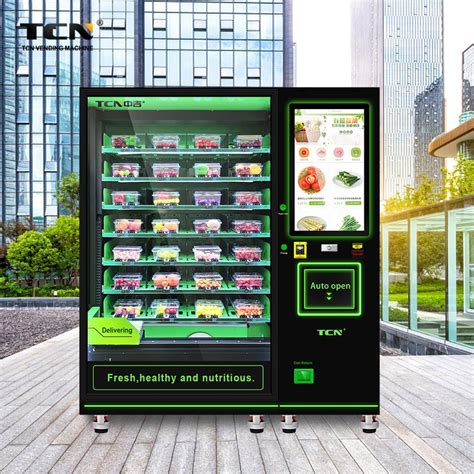
Modern gourmet vending machines use:
- Continuous temperature monitoring
- Automatic shutdowns if safety thresholds are breached
- Short shelf-life windows
- Frequent restocking schedules
In many cases, these systems are more tightly controlled than small independent restaurants.
Automation doesn’t reduce safety—it enforces it.
Where Gourmet Vending Machines Work Best—and Where They Don’t
These machines thrive in environments where convenience matters more than ambiance.
They perform best in:
- Office buildings
- Hospitals
- Universities
- Airports
- Gyms
- Residential complexes
They struggle in places where dining is primarily social or experiential, such as fine-dining districts or tourist-heavy restaurant rows.
They don’t replace restaurants. They replace friction.
Are We Heading Toward a Fully Automated Food Future?
Not entirely—but automation will play a larger role than many expect.
The future of dining likely includes:
- More centralized kitchens
- Fewer large dining rooms
- Hybrid human-machine food models
- Data-driven menus
- Personalized food access
Gourmet vending machines aren’t the end of restaurants. They represent a new layer of food access.
What This Trend Reveals About Modern Dining Psychology
At its core, this trend isn’t about machines—it’s about control.
Modern diners want:
- To eat when they want
- To know exactly what they’re getting
- To avoid long waits
- To skip tipping pressure
- To minimize wasted time
Gourmet vending machines quietly deliver all of that.
Practical Takeaways for Consumers and Food Entrepreneurs
- Convenience no longer equals low quality
- Automation can coexist with craftsmanship
- Dining is becoming modular
- Transparency builds trust
- The line between retail and restaurants is blurring
The smartest food businesses aren’t resisting this shift—they’re adapting to it.
Frequently Asked Questions (Trending Search Queries)
1. What is a gourmet vending machine?
Ans. A gourmet vending machine dispenses fresh, high-quality meals using smart refrigeration, heating, and payment systems.
2. Are gourmet vending machines replacing restaurants?
Ans. No. They primarily replace fast food, convenience meals, and limited-service dining, not experiential restaurants.
3. Is the food inside these machines actually fresh?
Ans. Yes. Most machines are restocked daily and monitored continuously for temperature and safety.
4. Are gourmet vending meals healthy?
Ans. Many offer nutritionally balanced options with transparent labeling and whole ingredients.
5. Why are companies installing gourmet vending machines?
Ans. Lower labor costs, 24/7 access, predictable revenue, and scalability.
6. Do chefs work with gourmet vending companies?
Ans. Yes. Many chefs design menus and oversee centralized production.
7. Are gourmet vending machines safe?
Ans. They follow strict food safety regulations and often exceed small-restaurant controls.
8. Where are gourmet vending machines most popular?
Ans. Offices, hospitals, airports, campuses, and residential buildings.
9. Are they cheaper than restaurants?
Ans. Often yes, especially when factoring in speed, convenience, and no tipping.
10. Is this trend here to stay?
Ans. Yes. It aligns with long-term shifts in labor, technology, and consumer behavior.
Final Thought: The Future of Dining May Be Quiet—but It’s Not Empty
Gourmet vending machines don’t demand attention. They don’t call themselves revolutionary.
They simply work.
And in a world where time is scarce, labor is expensive, and expectations are high, that quiet efficiency may be the most disruptive force in food today.
The future of dining may not look like a restaurant.
But it will still be about feeding people well.