The Statue of Liberty isn’t just a symbol — it hides sealed chambers, restricted stairways, and forgotten engineering secrets that most Americans never learn about. From a torch room closed for over a century to hidden wartime guard stations, the interior of Lady Liberty reveals a dramatic story of survival, innovation, immigration, and national identity that transforms how we understand America’s most iconic landmark.
For over 135 years, the Statue of Liberty has stood as one of the most recognized monuments in the world. Millions photograph it. Millions admire it. Millions feel emotionally connected to what it represents.
But almost nobody understands what’s hidden inside.
Behind the copper exterior that glows green against the New York skyline lies a maze of staircases, sealed rooms, structural chambers, and historic spaces that feel closer to an industrial machine than a sculpture. The inside of the Statue of Liberty is raw, mechanical, and mysterious — a hidden world that few Americans ever experience firsthand.
And once you understand what’s inside, you’ll never look at the statue the same way again.
The Statue of Liberty: More Than a Monument
The Statue of Liberty was dedicated in 1886 as a gift from France celebrating American independence and democratic ideals. Designed by sculptor Frédéric Auguste Bartholdi and engineered internally by Gustave Eiffel, the monument was revolutionary for its time.
According to the National Park Service, the statue receives over 4 million visitors annually, making it one of the most visited landmarks in the United States. For many families, visiting Liberty Island is emotional. It represents immigration stories, survival journeys, and generational sacrifice.
For millions of immigrants arriving through Ellis Island in the late 19th and early 20th centuries, the statue was their first sight of America. Oral histories describe tears, prayers, and silent awe as ships passed the monument.
Yet while the outside is celebrated endlessly, the inside remains one of America’s best-kept architectural secrets.
What Is Actually Inside the Statue of Liberty?
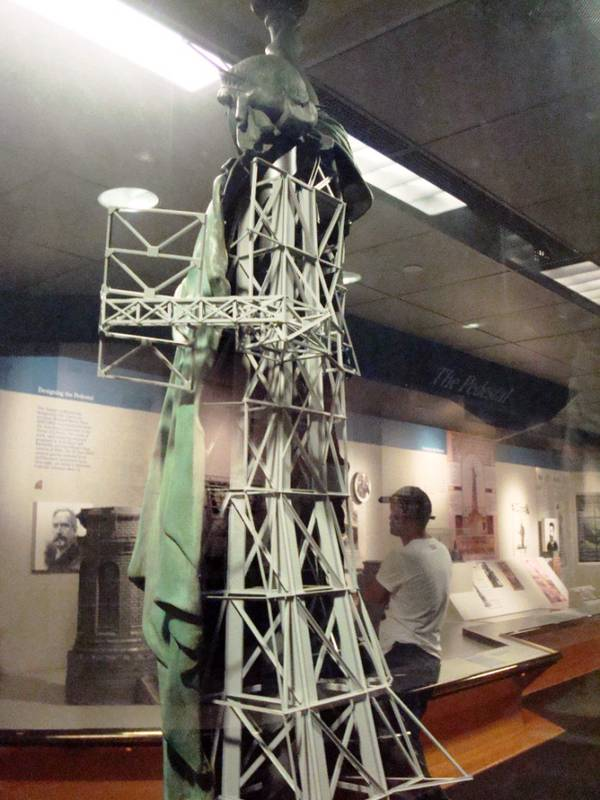
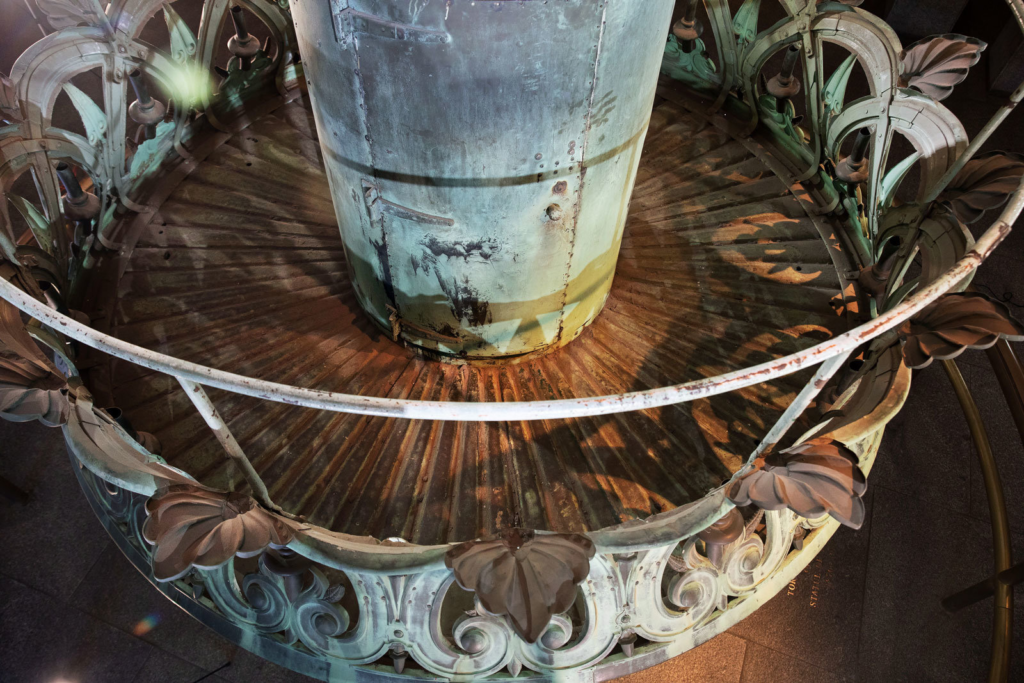
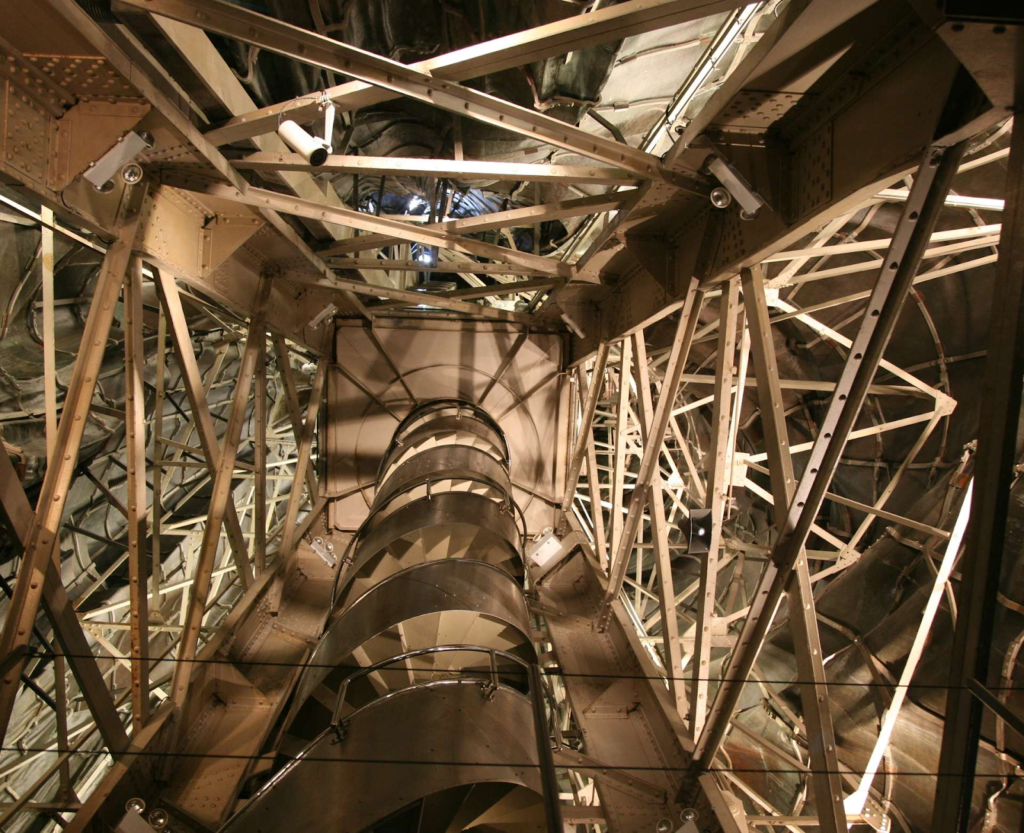
The statue is hollow — but not empty. Inside is a carefully engineered skeletal structure that holds the copper shell in place while allowing the monument to move safely in wind and temperature changes.
The interior includes:
- A spiral staircase with 354 steps to the crown
- A central iron pylon supporting the structure
- Maintenance catwalks suspended behind the copper skin
- Structural beams designed to flex in storms
- Observation windows hidden behind the crown spikes
- Restricted chambers closed to public access
Visitors who climb inside often say it feels like entering a giant mechanical organism. There is no decorative interior. No polished marble. No museum aesthetic. Instead, you encounter exposed rivets, iron supports, narrow corridors, and tight turns.
It is a working structure — not a decorative one.
That rawness surprises nearly everyone.
The Sealed Torch Room: America’s Most Famous Closed Space
One of the most searched questions about the statue is:
“Why can’t you go inside the torch?”
The answer connects to a dramatic historical event that many Americans never learn in school.
In 1916, during World War I, German agents sabotaged a munitions depot on Black Tom Island in New Jersey. The explosion was so powerful that it shattered windows across Manhattan and sent shrapnel flying into the Statue of Liberty. The blast damaged the torch and weakened its structural integrity.
After the explosion, authorities permanently closed the torch to visitors.
Even today, over a century later, public access remains forbidden. Only maintenance personnel are occasionally allowed entry, and even they operate under strict safety protocols.
The closed torch has become legendary — a symbol of a hidden space Americans can never reach.
And that mystery fuels endless fascination.
Hidden Wartime Roles of the Statue
Most people think of the Statue of Liberty purely as a symbol. But during wartime, it served practical strategic purposes.
During World War I and World War II, the statue functioned as a surveillance and observation point. Guards were stationed inside to monitor New York Harbor for potential threats. Restricted areas inside the pedestal were used for security operations and equipment storage.
These hidden wartime chambers are not glamorous. They are narrow, functional, and utilitarian. Yet they reveal a side of the statue rarely discussed: it was part of national defense infrastructure.
The monument wasn’t just symbolic — it was operational.
The Experience of Climbing Inside the Statue
Visitors who reach the crown describe the journey as intense, emotional, and physically demanding.
The staircase narrows as you climb. The air grows warmer. The copper walls curve tightly around you. The space feels more like a submarine interior than a tourist attraction.
Real-life accounts from travelers often mention:
- A mix of excitement and claustrophobia
- Heat buildup from limited ventilation
- The sound of footsteps echoing through metal
- A sudden emotional rush upon reaching the crown
When you finally look out through the tiny crown windows, the view feels earned. You’re not just seeing New York Harbor — you’re seeing it from inside a symbol.
That distinction changes the experience completely.
Engineering Genius Hidden in Plain Sight
Gustave Eiffel’s internal design is one of the statue’s greatest secrets. Without it, the monument would not have survived storms, temperature changes, and over a century of exposure.
The copper skin is only about 2.4 millimeters thick — roughly the thickness of two stacked pennies. The statue survives because the internal framework allows controlled movement.
Key hidden engineering features include:
- Flexible armature connections
- Expansion joints for temperature shifts
- Wind-resistance sway design
- Corrosion-resistant reinforcements added in the 1980s
- Structural redundancy for long-term stability
According to restoration engineers, the statue can sway up to three inches in high winds without damage. That movement is intentional — it prevents stress fractures.
The monument is not rigid.
It is alive with controlled motion.
The Hidden Evolution of Meaning
Inside the pedestal lies a plaque bearing Emma Lazarus’ poem “The New Colossus.” This poem reframed the statue’s purpose from diplomatic gift to immigrant symbol.
“Give me your tired, your poor…” became one of the most quoted lines in American cultural history.
Interestingly, the poem was not part of the original design. It was added later and gradually shaped public interpretation. Over time, Americans attached emotional and political meaning to the statue that extended beyond its initial intent.
The hidden message inside the monument is this:
Landmarks evolve.
Symbols change.
Meaning is built by people, not just architects.
Why Some Areas Must Remain Restricted
Modern preservation standards require limiting access to protect historic structures. The Statue of Liberty is constantly monitored for corrosion, metal fatigue, and structural stress.
Restricted zones protect:
- Fragile historic materials
- Structural integrity
- Emergency escape infrastructure
- Maintenance systems
- Visitor safety
Opening every chamber to tourism would accelerate damage. Preservation demands sacrifice — and sometimes that means mystery remains.
Hidden Human Stories Inside the Monument
Park rangers share stories rarely printed in guidebooks. Early 20th-century visitors carved initials into interior surfaces. Some markings remain visible today.
Immigrant accounts describe people kneeling in prayer when first seeing the statue. Families passed these stories down through generations. While not always documented in official archives, oral histories carry emotional truth.
The hidden interior holds not just iron and copper — it holds human memory.
And memory is often the most powerful architecture of all.
Can You Visit the Crown Today?
Yes — but planning is essential.
Crown tickets are limited and must be reserved months in advance. Visitors undergo strict security screening. There is no elevator to the crown. The climb is physically demanding and not recommended for everyone.
Practical tips:
- Reserve tickets early online
- Wear comfortable shoes
- Travel light (bag restrictions apply)
- Be prepared for tight spaces
- Take your time climbing
Those who complete the climb often describe it as unforgettable.
What the Hidden Interior Teaches Us
The statue reveals broader lessons about history and infrastructure:
- Great symbols require invisible support
- Engineering makes art possible
- Preservation demands compromise
- National identity evolves over time
- Familiar landmarks hide unfamiliar truths
Understanding what’s inside the Statue of Liberty changes how we view monuments everywhere.
Final Reflection
Most Americans know the Statue of Liberty from the outside.
Few understand the hidden interior.
Yet inside those sealed chambers and iron staircases lives a deeper story about resilience, immigration, war, innovation, and memory. The monument is not just something you look at.
It’s something you climb into.
Something you feel.
Something you experience from within.
And that hidden interior reminds us that America itself is layered — built from visible ideals and invisible structures working together.
Frequently Asked Questions
1. What is inside the Statue of Liberty?
A skeletal iron framework, spiral staircase, maintenance walkways, and restricted chambers supporting the structure.
2. Why is the torch closed to the public?
Damage from the 1916 Black Tom explosion permanently restricted access for safety reasons.
3. How many steps are inside the statue?
There are 354 steps from the pedestal lobby to the crown.
4. Can visitors still climb to the crown?
Yes, but tickets must be reserved months in advance and the climb is physically demanding.
5. Is the statue solid or hollow?
It is hollow with a flexible structural skeleton inside.
6. Are there secret rooms inside?
There are restricted maintenance and wartime chambers not open to the public.
7. Who engineered the internal structure?
Gustave Eiffel designed the interior framework.
8. How safe is the statue today?
It is continuously monitored and reinforced to meet modern safety standards.
9. Why does the statue move in the wind?
The structure is designed to flex safely to prevent damage.
10. What hidden message does the statue carry?
Emma Lazarus’ poem inside the pedestal transformed it into a symbol of immigration and hope.